Measures to Control Global Warming
The current challenge is to control unavoidable consequences with measures to avoid more serious consequences in the future.
Carbon Capture
One way to prevent carbon dioxide emissions from reaching the atmosphere is to conserve and plant more trees. Forests are disappearing around the world at an alarming rate, especially in the tropics. In many areas, reforestation is scarce and the land loses fertility or is used for other uses such as cultivated land or urban developments. Slowing down the rate of deforestation and planting new trees helps counteract the build-up of greenhouse gases.
Energy Sources
Solar, wind and hydrogen energy do not emit greenhouse gases. These energy sources can be practical, low-polluting alternatives to the use of fossil fuels. Other options are fuels obtained from plants such as biodiesel (obtained from new and used vegetable oil) and bioethanol (a gasoline additive obtained from plants).
Actions to Take Care of the Environment
The commitment to caring for the environment requires both individual and collective effort, which should result in a more pleasant planet to live in.
To avoid global warming and recover the natural conditions of Planet Earth, we must establish friendly habits with nature.
Among the many actions that we can carry out to take care of the environment are:
Recycle
There are many reasons to recycle: resources are saved, pollution is reduced, the life of materials is lengthened even with different uses, energy is saved, deforestation is avoided, 80% of the space occupied by waste is reduced By becoming garbage, taxes for garbage collection can be reduced while generating employment and wealth.
Most of the waste is reusable and recyclable, the problem is that, when mixed, it becomes garbage. One solution is to separate the waste so that you can recycle. It must also be taken into account that it is practically impossible for garbage to disappear by itself; It is enough to know how long some materials take to deteriorate in nature: a bamboo stalk can take 1 to 3 years to disappear, but plastics or glass bottles can remain intact for 500 to 1000 years.
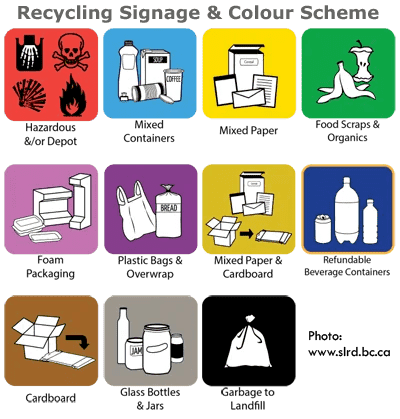
Currently (2018) very diverse materials are recycled; the most common are paper, glass, and packaging. Other materials that are recycled are cells and batteries, as they are highly polluting as they contain elements such as mercury (button cells), zinc (traditional batteries), nickel and cadmium (in computers and mobile phones) or manganese ( household appliance batteries). The recycling of computer-related consumables, such as ink or toner cartridges for laser printers, and computer equipment themselves is also booming. Lastly, composting is nature's way of recycling its own waste. It is the controlled decomposition of organic materials by the action of various microorganisms and invertebrates.
Turn Off the Lights
Artificial lights that are not being used at home or on the job site should be turned off to save energy. Do not leave appliances connected if they are not being used.
We can also set work schedules that make the most of sunlight, starting tasks earlier.
In summary, three types of energy conservation measures can be described. The first type is trimming, that is, dispensing with the use of energy. The second type is reform, which consists of changing life habits and the way of producing goods and services. The third type of measures implies a more efficient use of energy, taking advantage of it in simultaneous or complementary tasks.
Rationing Water
You can save water by replacing faucets in poor condition and reusing excess water from a job.
Reuse of Materials and Packaging
The environmental control that is carried out at the end of an industrial process is generally directed towards reducing volume and recovering waste for later reuse. This is the case, for example, in the recovery of metals from electrolytic baths or in the reuse of solvents.
The industrial procedures that take into account the minimization of waste, modifying the industrial process, saving raw materials and taking advantage of the waste that is generated, are called clean technologies.
Reusable bags abound today; so taking one to the supermarket is just a matter of good attitude, although we must avoid the use of plastic bags, since the production of these requires the use of approximately 12 million barrels of oil and its degradation takes approximately 20 years.
If you have any suggestions to help protect the environment, please write to us and we will add them to this list.
Tips from Our Readers
Sent by
 John 23:01 01/02/2021.
Ted 16:15 19/11/2020.
John 23:01 01/02/2021.
Ted 16:15 19/11/2020.
Recycling Signage and Color Scheme